
Salt Lake Booking-Photo Records
A booking photograph is created during an arrest and booking event. It identifies that event, not a later conviction, sentence, or current custody status. Someone can leave Metro or Oxbow while the Sheriff's underlying booking record remains. Yet continued agency custody of the record does not mean the image is open to every requester. Current Utah law classifies jail booking images as protected unless a statutory exception applies.
Possible exceptions include a qualifying conviction tied to the booking, a public-safety or fugitive need, or specified law-enforcement and judicial purposes. The Sheriff applies the classification to the facts of each request. A released person therefore may have a releasable image, a protected image, or no photo in the online channel being checked. The safe approach is to identify the booking and ask the records custodian for a decision.
Release status and photo access must stay separate. The dated Jail In/Out Docket can help locate a county movement. The release report can establish the actual custody event. The booking-image decision then follows Utah's current classification rules. None of those records alone establishes guilt, and charges remain allegations until resolved by the court.
Salt Lake Released Mugshot Channels
The strongest channel is the office that created or lawfully published the image. Salt Lake County's verified route is a Sheriff records request plus its mugshot agreement. Other commonly assumed routes were not confirmed here. The current docket and roster do not establish a photo field, no official jail-information mobile app was found, and the verified UDC public search has no photo. VINELink data can vary by participating source, so it should not be promised as a Salt Lake County photo source.
| Channel | Photo status | How to access |
|---|---|---|
| Sheriff GRAMA request | Conditional under Utah law | Identify the booking and submit the required mugshot agreement |
| Jail In/Out Docket or Roster | No routine photo field verified | Use for custody movement or the daily bed snapshot, not a gallery |
| Sheriff mobile app | No official app confirmed | Do not rely on an unofficial app as the county source |
| UDC Offender Search | No verified public photo | Use it for current UDC status and request any image through a confirmed UDC records route |
| VINELink | Not confirmed for this image | Use VINE for participating custody notices, not a promised photo result |
| Official press release | Sometimes, under a specific exception | Read the issuing agency's case-related publication |
| News or third-party archive | May carry an old copy | Treat it as secondary and verify all status facts with official records |
A photo found outside government control may be stale, copied from an older case, or matched to the wrong person. It cannot confirm a current release, supervision status, conviction, or present location. Use it only to locate the probable booking, then return to the Sheriff, court, or UDC record for the facts.
Note: Salt Lake County has no verified open released-person mugshot gallery, so a missing online image does not show that none exists.
Salt Lake Docket Has No Gallery
The Sheriff's official online page publishes daily Jail In/Out Docket PDFs and daily Roster PDFs. The docket is the release-oriented source because it tracks movement. The roster is only a daily snapshot of occupied jail beds. Research did not verify a routine photograph field in either document, and the interface does not establish a public mugshot gallery for released people.
No official Salt Lake County Sheriff jail-information app was confirmed in the reviewed county sources or app searches. An app with a similar name should not be treated as official without a link from the Sheriff. Likewise, no app-only mugshot feature can be claimed. The Salt Lake County 24-Hour Release List explains how the newest dated docket works, but that release method should not be presented as a photo search.
The jail Dashboard is also the wrong substitute. It is a current-bed snapshot and states that quick booking-and-release events may not appear. A missing name can mean release, transfer, timing, or another data issue. First identify the correct booking through the docket, court case, SO number, and date. Then use the records process for the image.
Request Salt Lake Booking Photos
Submit the request through the county's NextRequest portal or the Sheriff GRAMA form. Name the Sheriff's Office as the agency because each county office keeps its own records. A focused request reduces the chance of delay and avoids asking staff to create a new report that does not exist. The Salt Lake County release-record instructions cover the full booking and release report when the photo is only one part of the needed record.
- Identify the person by full legal name and aliases. Add SO number, court case, booking date, and facility when known.
- Ask for the existing booking image tied to that booking. Request the booking and release report too if the event itself must be confirmed.
- Complete the Salt Lake County mugshot agreement. It requests SO number, name, case, and booking date.
- Provide photo identification before records are released. Complete a valid third-party consent form if the Sheriff says it is needed.
- Wait for the agency's classification decision. A response may grant access, deny it, report no record, or state an extraordinary circumstance.
Under the county GRAMA process, the first 30 minutes of staff time are free. More staff time is $25 per hour, paper copies may cost up to $0.50 per page, and certified copies are $10 or the applicable statutory amount. Prepayment may be required above a $50 estimate. Ordinary requests generally receive a response within ten business days, subject to extraordinary circumstances.
Those fees and time limits do not promise image release. Utah Code §63G-2-305 controls protected classification, and Title 17 Chapter 72 Part 8 governs the Sheriff's signed statement and publish-for-pay restrictions. False statements in that process can have criminal consequences.
Salt Lake Secondary Photo Sources
An official press release may include a photo when a public-safety exception applies. That narrow publication does not make every booking image public. Read the issuing agency's words, date, and case reference, then check the court and custody records for later developments. A press image can remain online long after a release, dismissal, or change in supervision.
News reports and non-government archives may also preserve copies. No commercial gallery is linked or endorsed here. Those sources are weaker than the Sheriff's record because they can be stale, misidentified, or detached from the final court outcome. Never infer present custody from an old image. Check the name, booking date, case number, and official disposition before connecting the copy to a specific event.
Utah Xchange can help trace the case that followed the booking. It may show the court, charges, plea, disposition, and chronological entries, but it is not a physical custody locator and does not supply a verified Sheriff image. The official Xchange field guide shown below explains the case-record route.
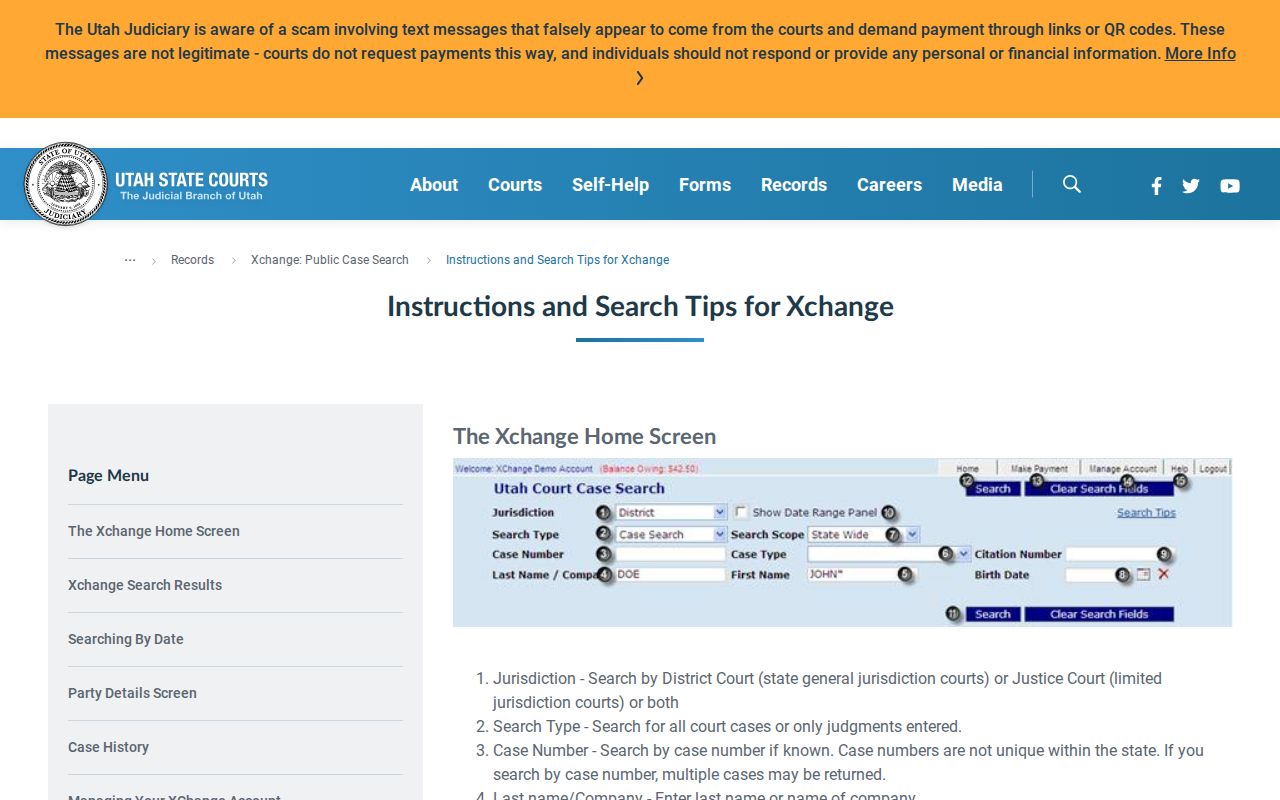
Use the resulting case detail to interpret the arrest record, not to claim that a booking photograph reflects a current legal status.
Salt Lake Mugshot Removal Rules
Expungement changes the public court record. Utah Courts says the public Xchange case no longer appears after expungement, while a party's MyCase title changes. It does not guarantee that every independent copy of a booking photo vanishes at the same moment. The official record holder and any outside publisher have different duties and correction routes.
Utah's publish-for-pay law creates a general removal and destruction process. It also provides a faster seven-day, no-fee route when qualifying proof establishes acquittal, non-prosecution, expungement, vacation, or pardon. The broader statutory process can allow up to 30 days and limits a charge to no more than $50. No removal service is needed to invoke rights stated in the law, and no commercial service is endorsed.
For an error in an official record, contact the office that created it. The Sheriff controls its booking image and report; the court clerk controls CORIS and Xchange entries; UDC controls its corrections record. A third-party page cannot amend those source records. Preserve the response or denial if an appeal or later correction is needed.
The Utah Courts expungement resource explains public-case visibility after relief.
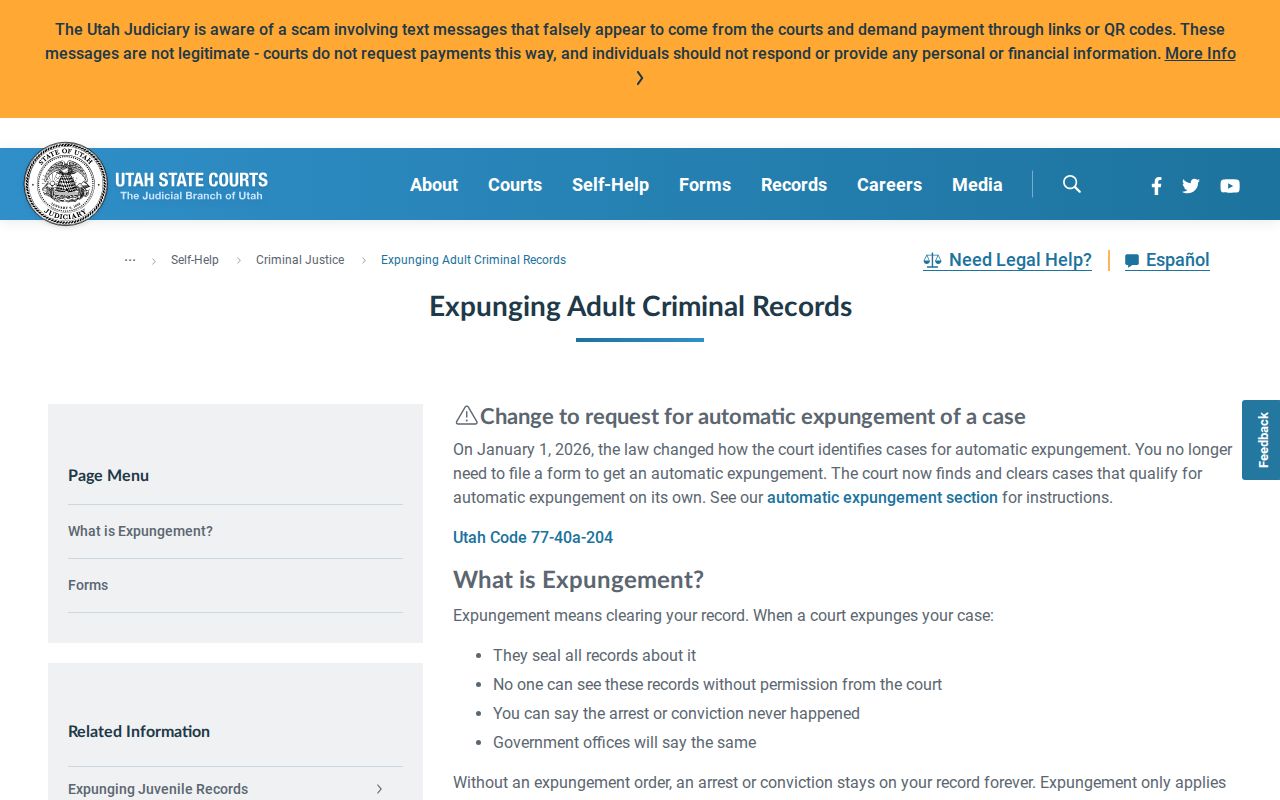
That court process is distinct from asking a qualifying publisher to remove a copied image under the separate booking-photo law.
Note: Utah's expungement clock may run from the latest of case completion, custody release, or the end of parole or probation.
Why Salt Lake Mugshots Are Protected
Salt Lake County's signed mugshot agreement reflects Utah's present protected-image framework. A requester must identify the booking and certify that the image will not be supplied to a publish-for-pay outlet. The Sheriff then applies the law's exceptions and any needed redactions. This is a case-by-case records decision, not a search box that returns a gallery of everyone released from jail.
The image status also differs from the release record. A release date, authority, or transfer destination can be sought even when the booking photo remains protected. Ask for both records by name, and let the agency separate public portions from protected material. If access is denied, the written response should state the reason and appeal information required by GRAMA.
Utah's offense-limited registries do not fill this gap. They cover only people subject to specific statutory registration duties and are not general lists of released inmates. The Utah Department of Public Safety gateway shown below is an official route for those limited programs.

A registry appearance cannot establish the exact jail release date, and absence says nothing about an unrelated booking photograph.
Verify Salt Lake Photo Context
Start with the booking event, not the image. Match the person's full name, SO number, booking date, facility, and court case. The Sheriff release report can show when county custody ended and whether the outgoing event was a community release or a transfer. The court record can show how the charges were resolved. UDC becomes relevant only when the person entered state jurisdiction.
A roster absence is weak evidence. A current roster shows who occupied a jail bed at a daily snapshot, while the In/Out Docket tracks movement. Someone may be absent because of release, transfer, timing, or the age of the online files. A copied photo is weaker still. It can remain visible years after the related event and may lack the later legal outcome.
The same care applies to federal and immigration cases. A Salt Lake County release to ICE, USMS, or another sovereign is a handoff, not proof of community freedom. The county booking image documents the county event only. Use the receiving agency's official locator or record for what happened next, and keep that later status separate from the photograph.