
Salt Lake Scheduled Versus Actual Release
“Projected release date” is a common search phrase, but Utah's public UDC record uses the exact label Release Date/Type. The value must be read with location, housing facility, case manager, and the Board decision. It may describe a parole or release action for someone still under UDC supervision. The interface is not labeled as a separate tentative-date calculator, and it is not a full archive of everyone discharged from Utah custody.
A scheduled or Board-effective date describes authorized future action. The actual release is the point when the custodian completes the physical event. Those dates can differ if the Board rescinds its decision, a new hold appears, required placement is not ready, or processing continues. A county jail outgoing movement can also be a transfer to UDC rather than freedom in the community.
Pretrial detainees need a different analysis. Until the court orders release, bond is satisfied, charges are resolved, or another legal event occurs, there may be no fixed departure date. Never import a UDC state-prison calculation into an ordinary Metro or Oxbow detention. County jail records and the court control that event.
Find Salt Lake Projected Release Dates
Start by identifying the custodian. The UDC Offender Search applies to people currently incarcerated, on probation, or on parole under Utah Department of Corrections supervision. It does not cover every Salt Lake County jail detainee. Fully discharged people may also disappear because the public search is limited to current supervision.
- For a state prisoner, search UDC by first and last name or offender number. Use date of birth and the UDC number to resolve similar names.
- Open the detail and read
Release Date/Typeexactly as shown. Compare it with location, housing facility, and case-manager details. - Search the Utah Board hearings and decisions. Review the decision description, effective date, and order PDF.
- For Metro or Oxbow custody, inspect the Sheriff's In/Out Docket and the court case. Ask jail records for the actual release date and authority when precision matters.
- After the effective date, confirm completion with UDC, AP&P, or the issuing jail record. A future order alone is not proof of departure.
The Salt Lake County release-record path covers the county docket, roster limits, and formal Sheriff request. For state custody, the Board's public record shown below can explain an authorized parole date and the kind of review that produced it.
The official Board decision search is the source for hearing and decision data.
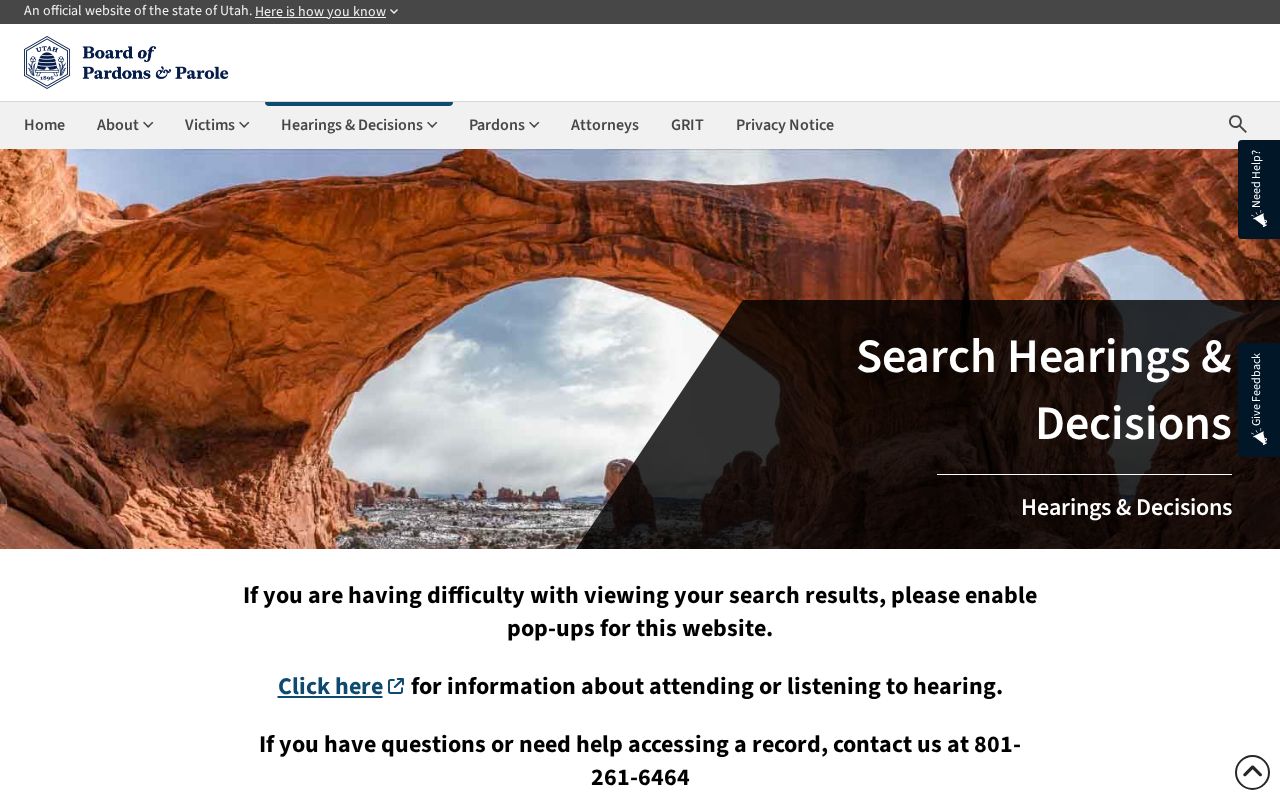
Use its effective date with the post-effective UDC status, since an order can change before the physical release is complete.
Note: A person missing from the current UDC search may be fully discharged, not never released; request older agency records for proof.
Utah Earned-Time Release Rules
Utah uses indeterminate sentencing. A judge generally imposes a statutory range rather than one simple release day. The Board combines concurrent or consecutive terms, schedules review, and decides release or rehearing within the legal limits. Sentencing guidelines help inform that work, but they do not command a binding date. Conduct, case-plan programming, risk, victim information, a release plan, new matters, and Board action can all affect the result.
Effective July 1, 2026, Utah Code §77-27-5.4 requires a Board earned-time program. An eligible person who successfully completes each of up to two approved Case Action Plan programs earns at least four months, and the Board may grant added discretionary credit. The statute also lists exclusions, such as too little time left on an already ordered date, life without parole, service to expiration, no current release date, an unmet release contingency, or an existing Board termination date.
Credit is not automatic daily county-jail good time. It may be forfeited when a rescission hearing becomes necessary, and UDC must notify the Board after qualifying program completion. No verified general Utah rule requires every prisoner to serve a fixed 85 percent of a sentence. Older cases must be assessed under the law that applied at that time.
The current earned-time statute shown below is the controlling source for the program.
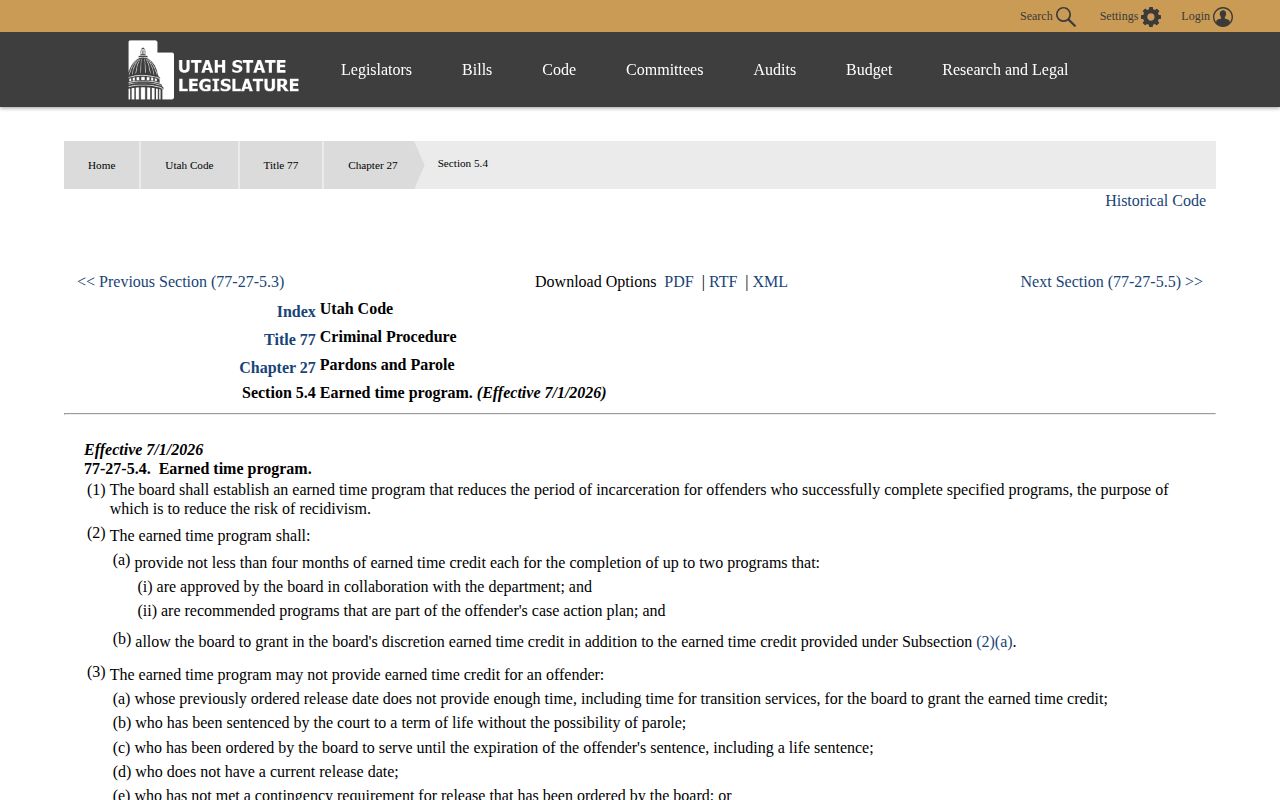
Its eligibility limits show why a release date cannot be derived from a universal percentage or a simple sentence calculator.
Why Salt Lake Release Dates Change
A date may move for legal, administrative, or placement reasons. Some changes come from the Board, while others arise from a court, UDC, or another custodian. The source must be identified before the change is interpreted. A later date does not always mean a new sentence, and an earlier county-jail departure can still lead into state or federal custody.
| Factor | Possible effect | Best confirming source |
|---|---|---|
| Board decision or rehearing | Sets or revises parole and review timing | Board decision and order |
| Rescission or new misconduct | Can remove a future release date before release | Board review record and UDC status |
| Earned-time program | May reduce an eligible ordered term | UDC completion notice and Board record |
| Release contingency | Can delay action until an approved plan or placement exists | Board order, UDC, and AP&P |
| Detainer or hold | May turn one agency's release into a transfer | Sending and receiving agency records |
| Court order | May amend a sentence or direct a county release | Filed court order and custodian record |
A detainer is a request or legal basis for another agency to take custody. It is why “released” from Salt Lake County jail may describe only the end of the county event. If UDC, ICE, USMS, or another jail receives the person, the receiving agency must confirm what came next. A Board release to a community correctional center likewise ends secure prison confinement but does not end AP&P supervision.
Confirm Salt Lake Actual Release
For a state prisoner, pair the Board order with UDC information after the effective date. A community location, housing entry, Release Date/Type, and case manager can support that prison release occurred while parole remains active. Ask UDC or AP&P when the fields conflict. For a fully discharged person, request the actual release record and final supervision termination because the active UDC search may no longer return the person.
For a county detainee, the Sheriff's dated Jail In/Out Docket is the first online release-oriented record. The current Roster shows a daily bed snapshot and cannot prove release by absence alone. The Sheriff's general line does not disclose release dates, so a targeted GRAMA request is the stronger fallback when an exact time, authority, or receiving agency matters. Court records can explain the legal basis but do not replace the custodian's completed event.
Utah VINE can send a release or transfer alert for a participating jail or prison. Its notice should trigger a direct check with the Sheriff, UDC, or Board. The Salt Lake County VINELink check describes registration and confirmation. The Board has warned that technical issues may cause missing or inaccurate alerts.
Note: Operational databases do not update at one guaranteed instant, so signed agency records outrank alerts, roster absence, and expected pickup times.
Tuesday Salt Lake Release Processing
UDC ordinarily processes releases and paroles on Tuesday at Utah State Correctional Facility. The rule has a key Salt Lake County wrinkle: almost all UDC inmates housed temporarily in county jails still pass through USCF release processing. A disappearance from the county roster or an outgoing Sheriff docket entry can therefore occur before the state event is finished. It may record a move into UDC's process, not the person's final step into the community.
People paroling to a community correctional center are transported there by UDC. Those without rides may receive case-by-case transportation to a nearby UTA TRAX station and are released last. These details apply to Tuesday state releases. They are not Metro or Oxbow bond-release rules, and they should not be used to predict a county detainee's pickup time.
The UDC Release Day source explains the USCF process and transportation distinctions.
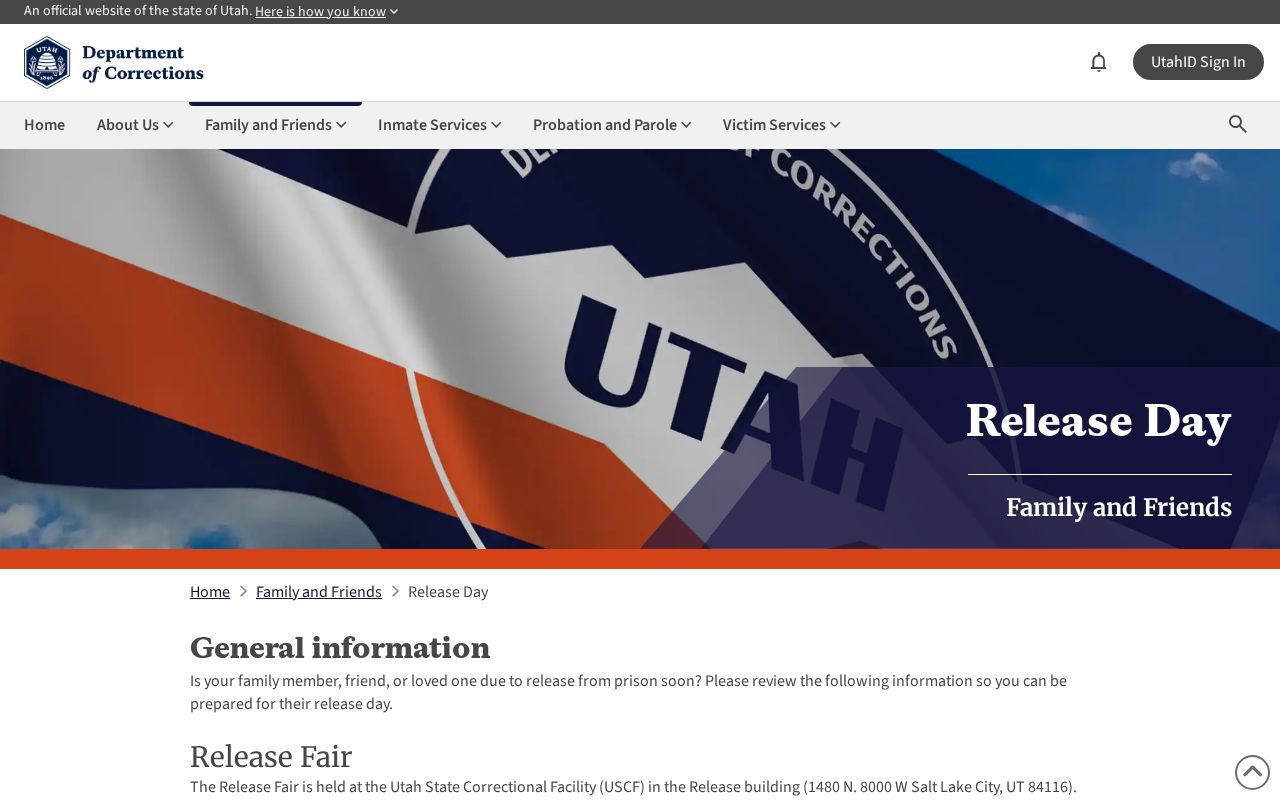
This operational sequence explains why the Board date, county movement, USCF processing, and community arrival can occur at distinct points.
Salt Lake Release Date Sources
The right source changes with the population. A sentenced UDC prisoner is checked through the state search, Board record, and post-date status. An ordinary Salt Lake County detainee needs the Sheriff's movement docket, release report, and court order. A parolee at Atherton, Bonneville, Fortitude, or Orange Street remains in a structured placement even after secure prison release. A federal prisoner belongs in the BOP locator and federal docket, not the UDC search.
When requesting an old state record, identify the UDC number, conviction or case, and approximate dates. Ask for the Board-ordered date, actual physical release, release type or destination, AP&P or center placement, and final discharge. That wording separates events that are often collapsed into one “release date.” For a county record, ask the Sheriff for the booking and release report, actual date and time, authority, and destination or receiving agency.
A source's silence must be interpreted narrowly. No current UDC result cannot prove that no state release occurred. No roster entry cannot prove community release. A future Board date cannot prove completion. Reliable answers come from matching the correct agency and record to the precise stage in the person's custody and supervision timeline.
Board records also require careful reading. Upcoming results can list a hearing date, time, type, location, and pending-decision status. Previous decisions can show the hearing type, final decision date, decision description, effective date, and a link to more information. A rescission hearing can remove a future release date, while a rehearing may set another review point rather than an exit. Quote the actual decision description instead of reducing every result to granted or denied.
For court cases, use the filed judgment and later orders to understand the sentence or county release authority. Utah Xchange may preserve those entries after a person drops off the jail roster, but it does not track physical custody. If the court authorizes release, the Sheriff's or UDC record must still show that the agency completed it. Where sources disagree, a directly issued release record and the signed court or Board order carry more weight than an alert, expected date, or family pickup plan.